

The age-old question: “Did you find housing yet?”
At the University of Michigan, this question can turn a casual conversation into a reminder that time, and housing options, may be running out.
After dealing with the housing crisis myself, I wanted to understand how out-of-state students without cars balanced rent, location, and roommates while searching for a place to live.
Through an independent research study, I explored what shaped their decisions and where the process became most difficult.
Research approach
Starting with the people facing these constraints
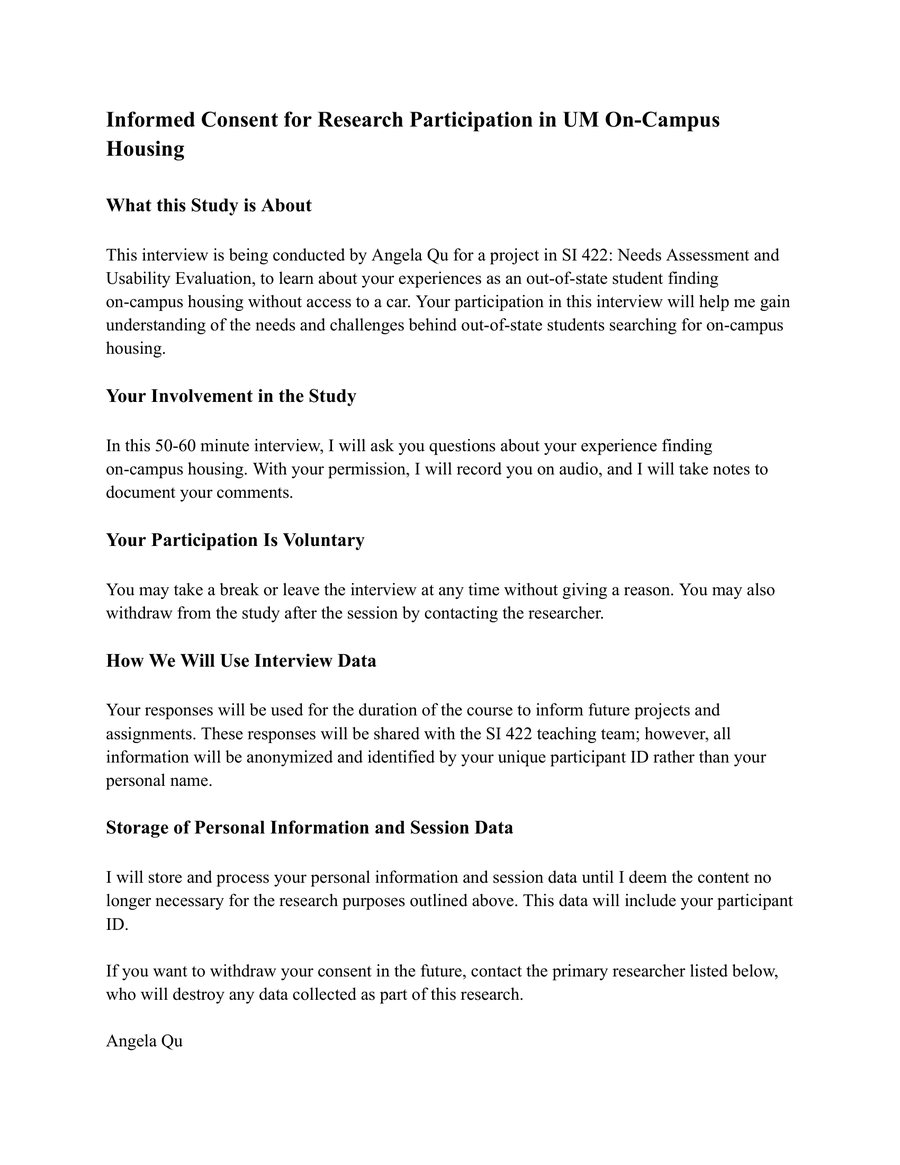

I first used a screener survey to recruit five U-M students who were from outside Michigan, did not have access to a vehicle, and had previously searched for housing in Ann Arbor.
I contacted participants by email and obtained informed consent before conducting 50–60-minute interviews about their experiences, priorities, and decisions.
This was a focused qualitative study. Its purpose was to understand these participants’ experiences, rather than represent every U-M student.
Going beyond a list of housing preferences
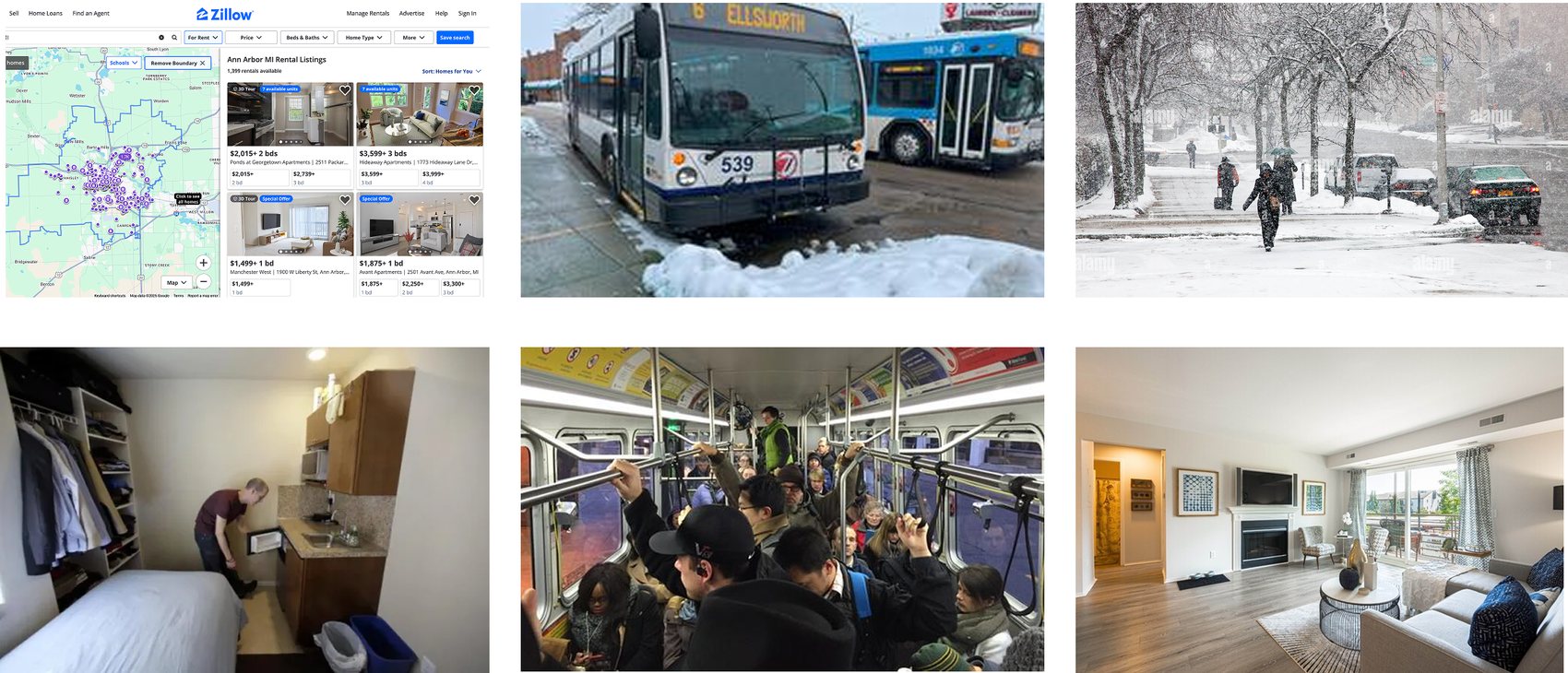
I used photo elicitation, an interview method that uses images to prompt discussion, to explore the experiences behind students’ housing preferences. I introduced seven photos showing situations such as heavy snowfall, crowded buses, small apartments, and luxury housing.
The images gave participants concrete scenarios to react to, helping them describe feelings, memories, and tradeoffs that direct questions might miss. Instead of only asking what they wanted in a home, I could explore why those needs mattered and how housing choices affected their daily lives.
Synthesis
Connecting individual experiences into a shared story
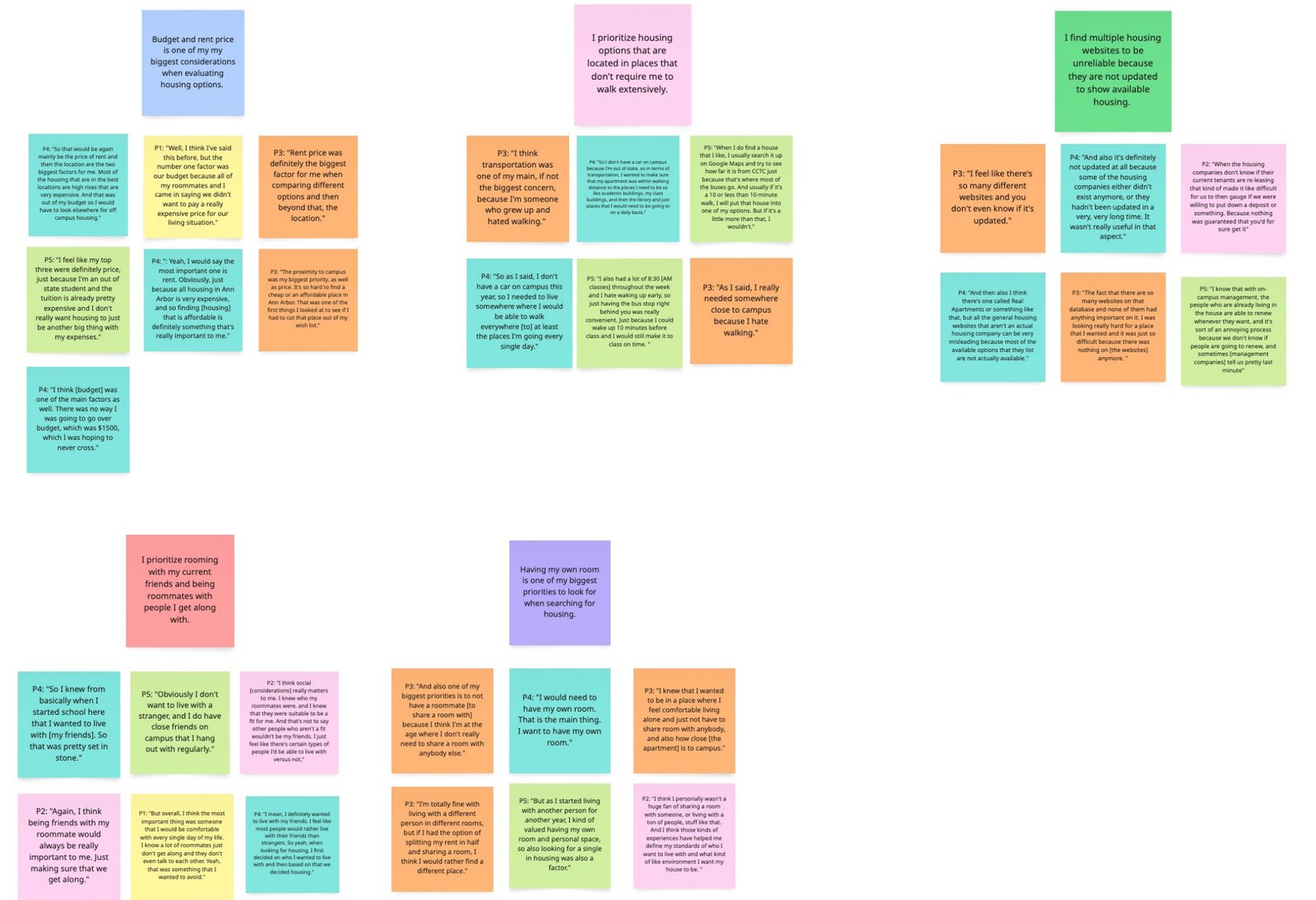
I organized interview responses in an affinity map and identified five recurring considerations: budget, location, listing reliability, roommate compatibility, and private space.
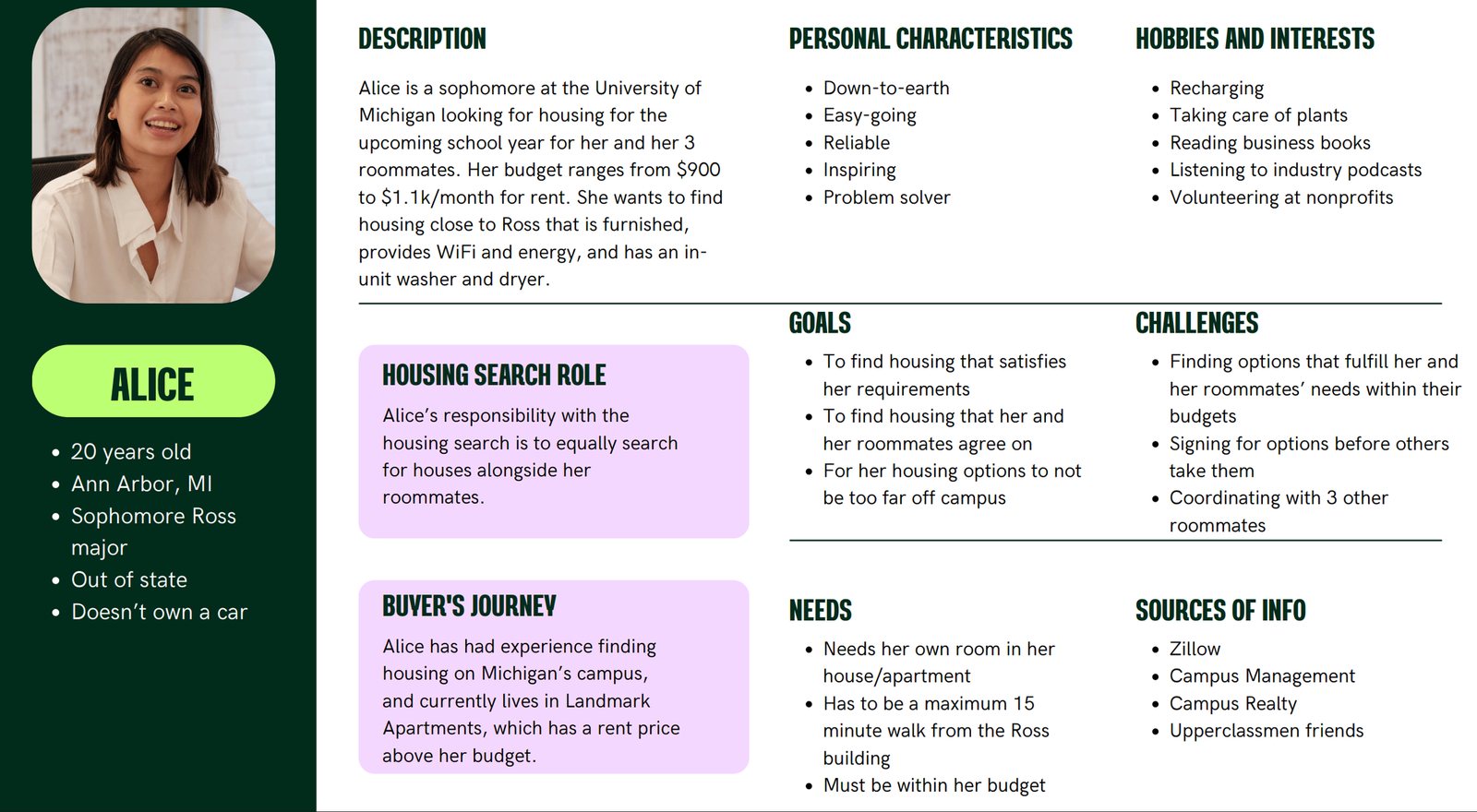
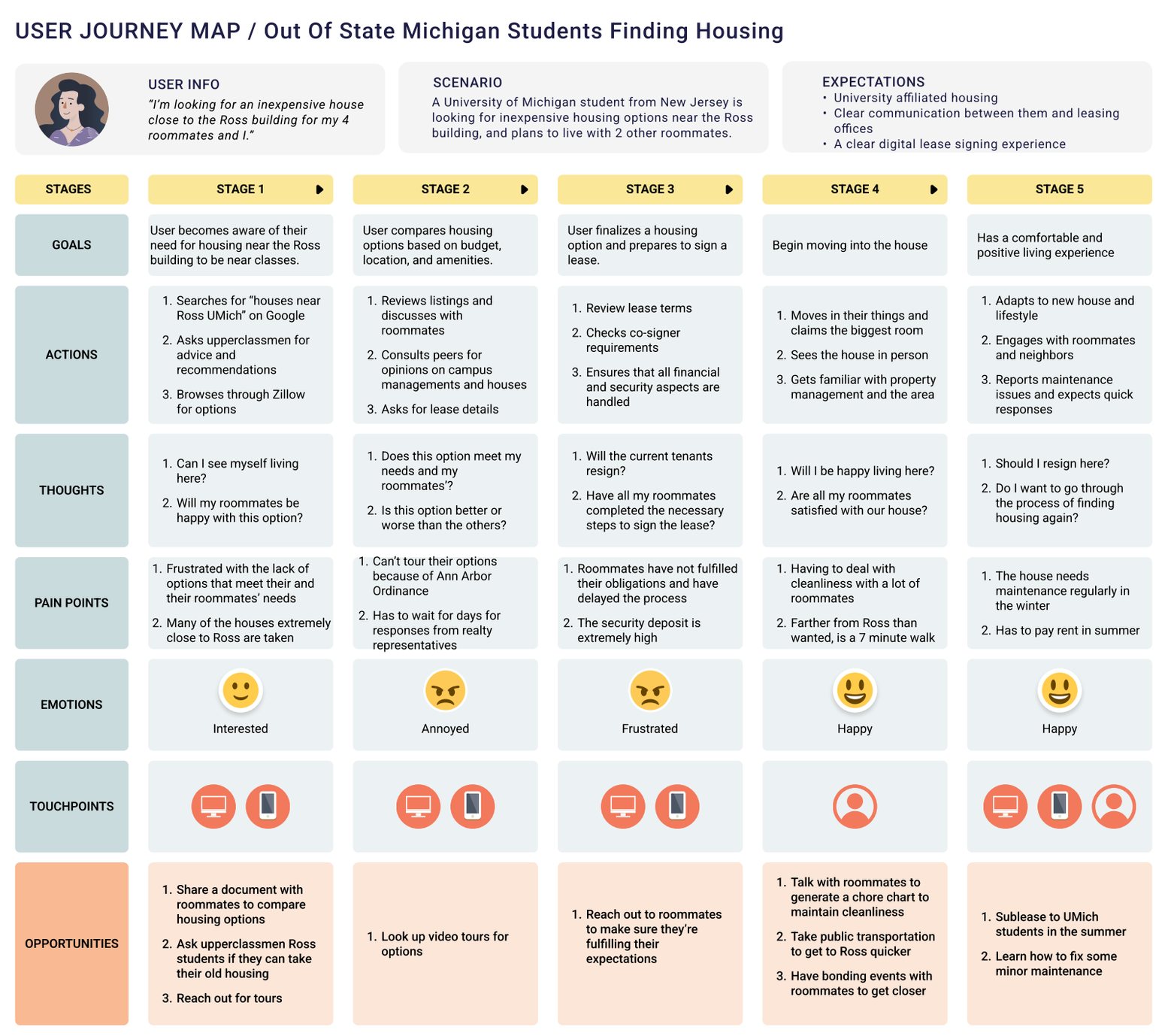
I then developed a composite persona and journey map to connect these themes across the housing search. The persona brought together participants’ needs and constraints, while the journey map showed where those constraints became difficult to manage.
The most challenging moments clustered around searching online and deciding which option to commit to.
Findings
Finding a listing was only the beginning
Students still needed to determine whether a listing was accurate, whether the total cost was manageable, and whether it worked for everyone involved. Four findings explain where that process became difficult.
Participants prioritized both rent and locations that reduced walking. Without a car, where they lived affected how they could move around Ann Arbor.
Some described choosing housing beyond their budget because available alternatives did not meet their needs.
What this revealed: Price alone could not explain whether an option was workable. Students needed to weigh cost alongside the realities of getting around.
Outdated listings, hidden fees, and poor communication made it difficult to assess options confidently. Participants wanted management companies to keep information current and respond promptly.
The challenge extended beyond finding enough listings: students needed to know which information they could rely on.
What this revealed: Listing accuracy and cost transparency were essential to making an informed decision.
Participants needed to find housing that worked for both themselves and their roommates. That meant balancing budgets, preferences, compatibility, and a desire for private rooms. Coordinating those decisions added work alongside school and other responsibilities.
What this revealed: The search was often a shared decision, but reaching agreement created its own set of challenges.
Participants described feeling that they needed to act before an option disappeared. That pressure made it harder to balance their priorities and contributed to compromises, including exceeding their intended budget.
What this revealed: Students were making consequential decisions while still working through uncertainty about the available options.
Research takeaway
Students needed confidence in their choices
Across the interviews, students were trying to answer three questions:
- Can I afford it?
- Can I get where I need to go?
- Will it work for the people I live with?
Outdated information and difficult coordination made those questions harder to resolve. The study suggested that improving the search experience would require clearer information and better support for comparing options together.
Opportunities
Turning findings into directions to explore

Make costs and availability explicit
Show when listings were last updated, clarify availability, and surface required fees alongside rent.

Support decisions about daily travel
Help students evaluate housing in relation to walking distances, transit, and the places they need to reach.

Make shared comparisons easier
Explore ways for roommates to compare options against agreed budgets, location needs, and preferences for private space.
These are research-informed opportunities for further exploration, rather than tested solutions.
Outcome
A clearer picture of where the search breaks down
Finding housing in Ann Arbor is a beast of its own, with challenges far beyond what one study could address. Still, this research revealed opportunities to make the search more manageable through clearer information and easier roommate coordination.
With more time, I’d explore these opportunities with a broader group of students and observe how they compare real listings together.
What did I learn?

Learning to look beyond my own experience
Having struggled with the housing search myself, I came into this project with plenty of assumptions. Interviewing other students taught me to stay curious rather than look for confirmation. Even when we shared similar frustrations, the needs and tradeoffs behind our decisions could be different.
I also learned how much the way I ask questions shapes what I hear. Photo elicitation gave participants another way to express their experiences and helped me explore the feelings and everyday concerns behind their preferences.
The biggest challenge was turning detailed, personal stories into clear findings without losing their nuance. I learned to look for patterns while making room for differences, and to recognize that five interviews could reveal valuable opportunities without telling the whole story. This project made me more thoughtful about how I gather evidence, interpret it, and decide what still needs to be explored.